

"I have heard men talk about the blessings of freedom, but I wish any wise man would teach me what use to make of it now that I have it."
—Sir Walter Scott, “Ivanhoe”
Merrie Olde England
A fool plays the friar, while a friar plays the fool. An idealized king turns out to not be the most judicious ruler. An oppressed Jewish maiden embodies the sanctity of a Christian martyr. A man falls prey to his unrestrained passions. This is the story of Ivanhoe, one of the best tales ever told about “Merrie Olde England.”
For as long as I can remember, I have loved stories that tell of the festive, chivalrous days of England.1 When I read Ivanhoe for the first time this summer, my heart thrilled again with the same excitement, the same passion, as it did the days of my youth, reading stories like Robin Hood. This led to me to reflect on why these stories still speak so universally to us, regardless of age or era.
These stories, of which Ivanhoe is a shining example, speak to us of a deep human need. Carried to us on the “sea breeze of the centuries”2, they whisper of a time when courage was the standard; when men fought unashamed for what was right; when honor and chivalry weren’t outdated tropes but values worth dying for. In an age when conviction bows before passivity and being a “nice person” outweighs standing for truth, we need stories like Ivanhoe to remind us that true freedom is not found in doing what is easiest, but in doing what is right.
Unbridled Adventure
There are (at least) three reasons why Ivanhoe is such an important story for our day. The first is the story’s sense of unbridled adventure
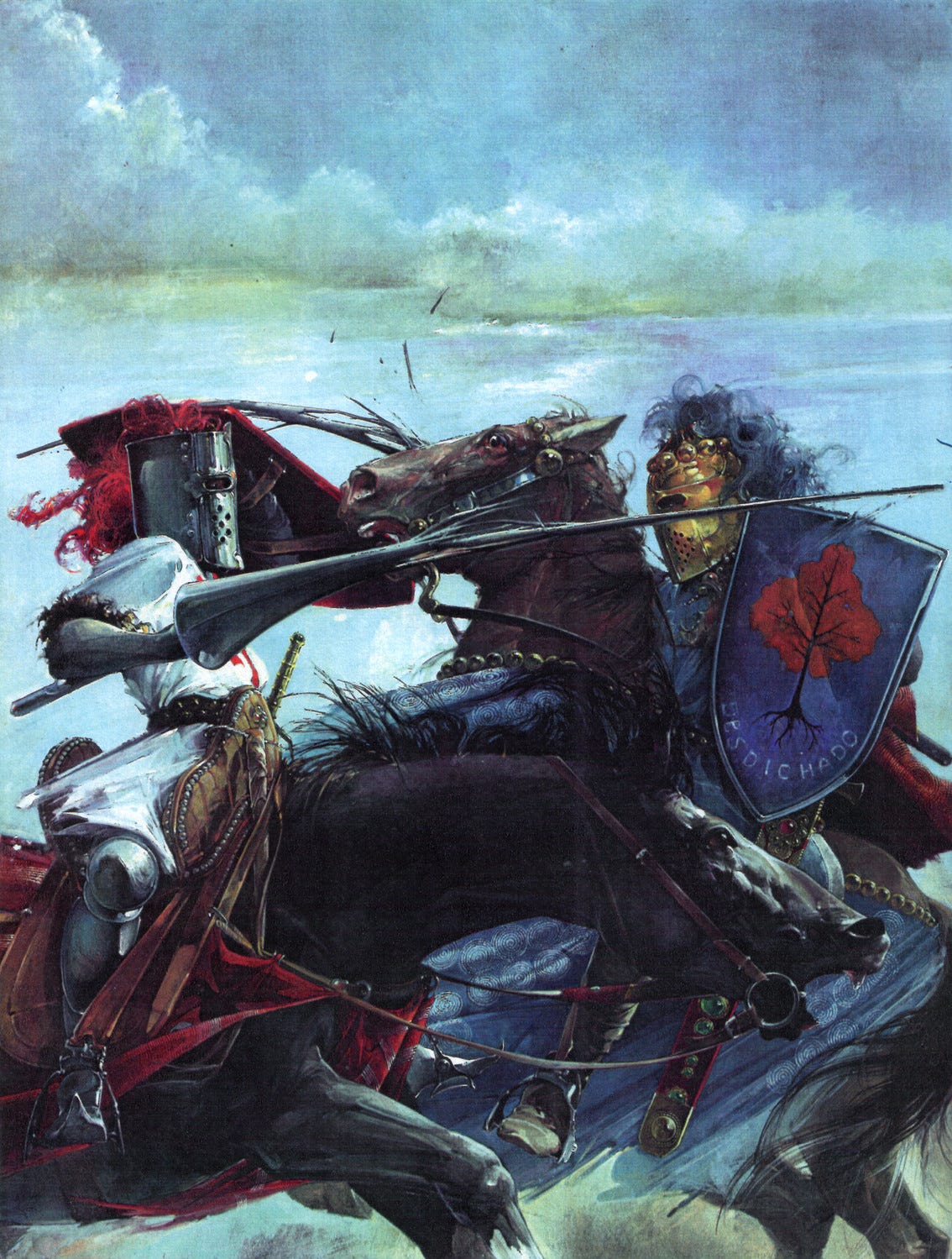
The adventurous spirit of stories like Ivanhoe cannot be understated. There is something purely enjoyable about reading a story where men punch each other in the face just for fun (Sorry, but I’m not taking that one back. Friar Tuck having a buffeting match with King Richard is a top tier literary moment). Now, if the adventurous spirit of the story only ran skin deep, there would indeed be a problem. The punching match isn’t fun just because two guys are wailing on each other. It’s fun because it points to something deeper, namely, the refusal to back down from a challenge merely because it involves pain or danger.
In Ivanhoe the characters run towards danger, not away from it. They don’t do this because they have a death wish, but because they desire to spend themselves entirely in service of the good, the true, and the beautiful. They don’t give in to fear, whether in battle or in seemingly dumb challenges from friends. Like kids playing dress up, the silly moments prepare them for the serious moments, when their valor (and perhaps their lives) will be called upon in service of others. This reckless spirit of adventure tells us that we too were made for the heights. In the words of Pope Benedict XVI, “The world offers you comfort, but you were not made for comfort. You were made for greatness!” Ivanhoe reminds us of this.

Shameless Chivalry
Ivanhoe also stands out as an example to the modern world of what it means to live with shameless chivalry. I remember having a genuine debate with some friends in college over whether it was appropriate for a man to open a door for a woman. At a certain point, I thought to myself, “Are we seriously having this conversation?” It seemed that we had entirely missed the point. Men and women are not courteous to each other because they disbelieve the other’s ability to do things for themselves; they are courteous because they desire to honor the dignity of the other person. This dignity shines forth in a special way in the complementarity of the sexes.
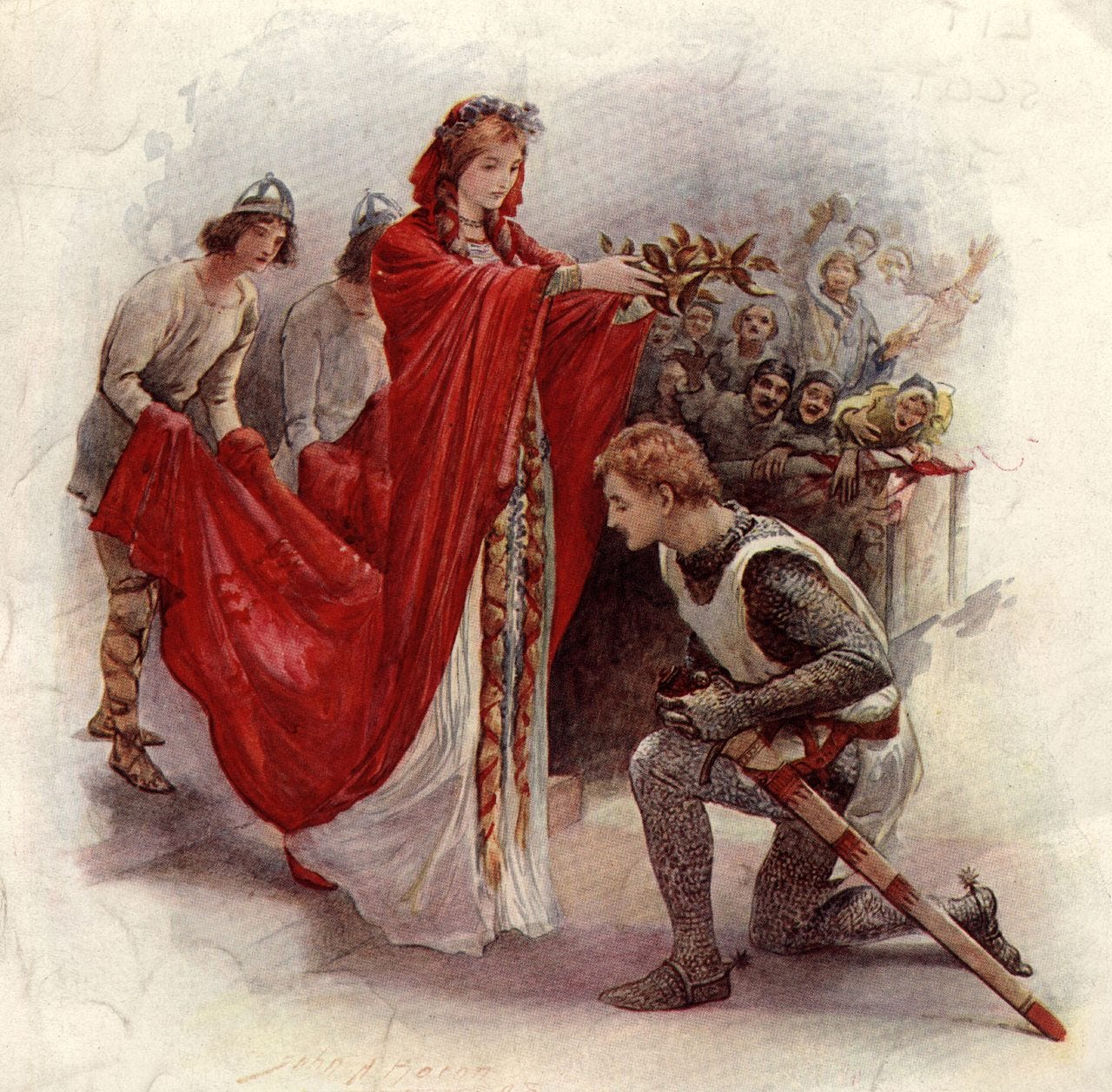
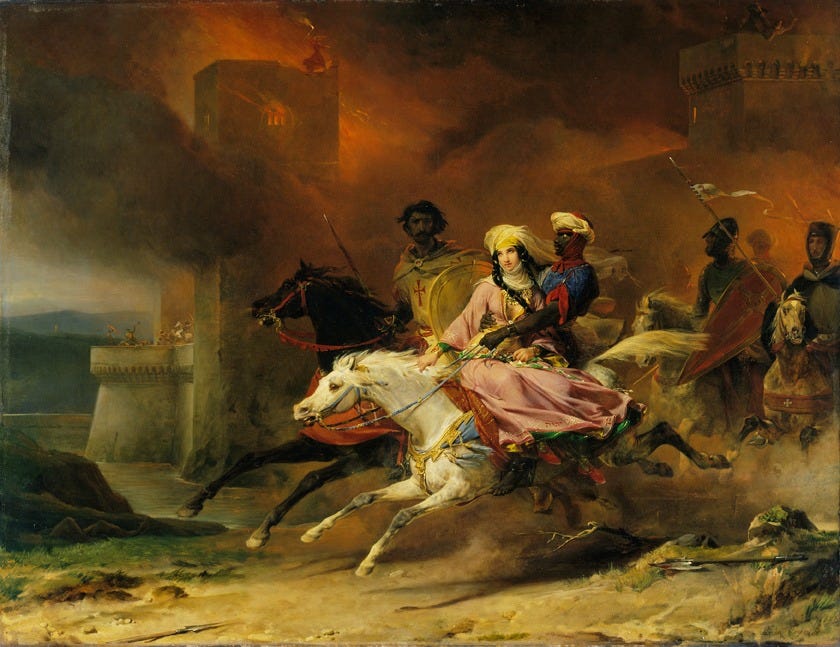
In Ivanhoe, the women aren’t offended when men fight for them. The men aren’t offended when women care for them. The fact that Ivanhoe, despite his shortcomings, jumps on his horse and gallops to Rebecca’s rescue the moment he hears she is in danger attests to this. It’s refreshing. There is a tenderness present between the characters that our society would do well to reclaim.
Timeless Themes
I would be remiss if I didn’t mention the deeper themes of Ivanhoe. When I picked up this book, I was expecting a romping good time. I was not expecting a delicate and complex conversation about the nature of freedom. Scott weaves this theme throughout every moment, showing us that freedom is not always found where we expect it.
The entire conflict of the novel revolves around two tension points: a king who is not free to reveal himself as king, and a maiden who is not free to live as she would. In both situations, Scott shows that freedom is not what it seems.
The men in the story who seem most free are often the most enslaved. They might be free to do as they wish, but they become enslaved by their passions and their prejudices. This renders them unsuited for navigating the challenges they encounter. The most obvious examples of this are found in the novel’s villains. But even the heroes have their limitations. King Richard, once free to reveal himself, is not the ideal king that everyone hoped he would be. He is a good king, certainly. But he is inconsistent in dealing with the traitors who sought his crown, making the reader a bit uncomfortable about what his reign will lead to.
Meanwhile, characters like Rebecca, who are the most enslaved and oppressed in a literal sense, are actually more free in spirit. Rebecca is free because she has command over herself. She is not a slave to her passions or her prejudices but uses reason and faith to conquer in her trials. In doing so, she rises above the mire of human concerns and ascends to heavenly virtue.
Perhaps my favorite move on Scott’s part was that he chose as his saintly heroine, not the Christian woman Rowena, but the Jewish maiden Rebecca. This flipped expectation reminds us that freedom is not found in merely looking a certain way or belonging to a certain group; rather it is the fruit of a spirit given wholly to God and to reason as its guide. Rebecca possesses freedom to a greater degree than Rowena, making her the superior female character.
We have all at some point encountered a story like Ivanhoe, which conveys that distinct spirit of “Merrie Olde England”. While scholars may debate about whether such an ideal actually existed in history, these stories nonetheless represent a very true “place”. They represent a way of living in which our spirit is free to achieve the heights of virtue we are called to. This is the “place” where we are free to face danger without fear; where we are free to honor others without shame; where faith and reason open us to receiving that peace “that surpasses all understanding.” (Philippians 4:7)
We need stories of rollicking adventure and unbridled chivalry to remind us that we too were made for greatness. For many years now, Robin Hood has sat at the top of my list as the embodiment of these wonderful tales. This summer, I added a new work to that number.
From what I understand, scholars generally agree that England was never a perfect utopia of chivalry and goodwill; but the stories of knightly chivalry still represent a very real ideal that is good and worth preserving, even if it was not perfectly actualized in history.
A phrase coined by C.S. Lewis in his foreward to Athanasius’ “On the Incarnation.”
Am 2/3ds the way through and enjoying it immensely, finding it a wonderful restorative to these chaotic days!
With books like 'Ivanhoe', it's their duality that allows their meaning to be so strongly analysed and conveyed. The background of 'simplicity' these stories are built upon gives a sturdy foundation for the complex conversations. Your analysis, especially on freedom, resonated with my own thoughts. Timeless themes, that of chivalry, identity, and freedom aren't gained from external factors but instead are a state of being - as you eloquently stated, freedom is 'the fruit of a spirit given wholly to God and to reason as its guide'. Great read!